Driveway Contractor in Rhodesdale, MD — A Lane That Holds Up
- 15 years in the trade
- $1,000,000 general liability insurance
- Owner-operator, Steve answers the phone
- Free estimates, same-day callback
A stone lane out here does not fail all at once. It goes a little at a time. One low spot holds water after a rain. A tire finds that soft spot and digs it deeper. The hole fills and holds more water, so it gets softer still. By spring you have potholes at the mailbox, a washboard halfway down, and you are driving in the grass to get around the worst of it.
That is not bad stone. That is a lane built without a base and without a crown. Water had no place to go, so it went into the ground under your drive and took the drive with it.
Steve Hackett has been running iron on the Shore for fifteen years, six of them for himself out of Rhodesdale. He builds drives and lanes the way the ground here demands: dig out the junk, get a real base under it, crown the top so water runs off the sides, and give that water a ditch or a pipe to leave in. Do those four things and a stone drive will carry a loaded truck for years with nothing but a light topping now and then.
What Driveway Problems Do You Have?
Almost every drive problem on the Eastern Shore comes back to water and the ground under it. The soil here is clay and silt over a high water table. Clay holds water instead of letting it drain, and it turns to grease when it is wet. Put stone straight on clay with no separation and the stone works down into it. In a year the surface is thin and the clay is up in the middle of your lane.
Flat ground makes it worse. Around Rhodesdale, Hurlock and Eldorado there is barely any fall to work with, so water does not run off a lane on its own. If the drive is level side to side, or worse, dished in the middle from years of grading, every rain puts a shallow pond right where you drive.
Then there is the ditch at the road. Half the potholes Steve sees are at the very end of the drive, where the county ditch crosses. When that pipe is crushed, undersized, silted shut or never there in the first place, the ditch water spreads out through your entrance and eats it every storm.
Sound familiar?
Ruts and washboard that come back a month after you have it graded. Potholes that hold water for days. Soft spots that a delivery truck sinks into every spring. Stone that has vanished into the mud. A lane so crowned in the wrong direction that water runs down the middle of it like a creek. A field entrance so torn up the equipment has to swing wide through the crop. Grass and mud where stone used to be.
The fix depends on which of those you have, and it is worth having somebody look before you buy another load of stone.
Our Driveway Services
Most jobs start with stone and gravel driveways. That is a new lane or a full rebuild: strip the soft ground out, put down a coarse base, top it with crusher run or #57 depending on how it will be used, and crown it. Millings and recycled asphalt are an option too, and they pack down tight and hold better than loose stone on a long drive that gets a lot of traffic.
If the bones of your lane are still good, you likely need driveway regrading and resurfacing. Steve cuts the high ground back, fills the low spots with the right material instead of dirt, rebuilds the crown, cleans the shoulders so water can leave, and tops it with fresh stone. That is the cheaper day, and on plenty of drives it is all that is needed.
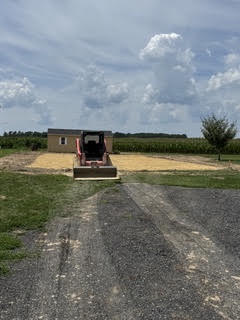
Out on the farms it is farm lanes and field entrances — long lanes back to a barn or a grain setup, entrances wide enough for a combine to turn in without dropping a wheel, and turnarounds that hold up under a loaded grain cart in wet weather.
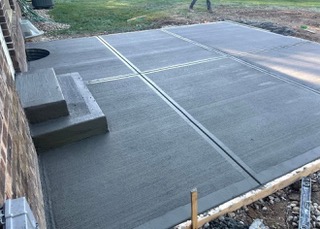
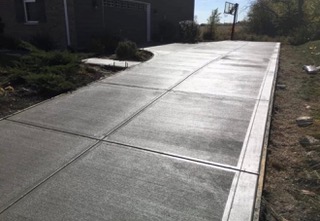
He also builds gravel parking areas for shops, churches and small commercial lots, and he does road base and subgrade prep for paving. If your drive is getting asphalt or tar and chip, the part that decides whether it lasts is underneath it — the dig, the base and the compaction. Steve does that part and subs the paving itself out to a paving contractor. He does not own a paver and he will tell you so straight. If you want concrete instead, that is his own work: see concrete driveways.
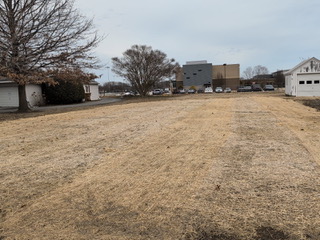
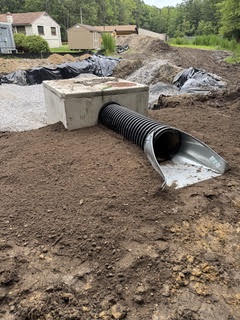
The last piece is the water. A drive is only as good as its drainage, so Steve handles the culvert at the end of the drive — new pipe, replacement pipe, headwalls and end protection — plus ditching along the lane and yard drainage where water is coming off the lawn and onto the stone. Where a lane has to cross low ground, he will build it up and pipe it rather than let you keep patching a hole that is going to come back.
Where He Works
Easton to the Delaware beaches, Salisbury to Centreville.
Dorchester County, MD
Rhodesdale, Hurlock, Cambridge, Secretary, Vienna
Caroline County, MD
Denton, Federalsburg, Preston, Greensboro
Talbot County, MD
Easton, St. Michaels, Trappe, Tilghman
Wicomico County, MD
Salisbury, Sharptown, Mardela Springs, Delmar
Queen Anne's County, MD
Centreville, Queenstown, Grasonville, Church Hill
Sussex County, DE
Seaford, Laurel, Lewes, Rehoboth Beach, Millsboro
Why Choose Marshy Hope Construction
Steve Hackett owns the business and runs the machine. Fifteen years in the trade, six of them working for himself out of Rhodesdale. He carries a $1,000,000 general liability policy and will send the certificate to you or your builder before he starts. Estimates are free, and you hear back the same day or the next one. One crew handles it from dirt to concrete, so nothing gets dropped in the handoff. Paving is the only thing he sends out.
Get a Free Estimate
Call Steve about your drive.
Free estimate, and you'll hear back the same day or the next one.
443-439-1019Open 24/7 · Serving Easton to the Delaware beaches, Salisbury to Centreville
A drive is dirt work before it is stone. Steve does excavating and concrete across the Eastern Shore, so the grade, the pipe and the stone all come from one crew.