Concrete Removal & Replacement in Rhodesdale, MD — Fix What's Under It
When You Need This
The slab is done and you know it. It is cracked in every direction, not in straight joints. A panel has dropped and the edge is a step now. The surface is flaking off in sheets and the aggregate is showing. Water stands on it in the same two spots every rain.
Other calls are about concrete that is in the way. An old shed pad nobody uses. A silo base. A set of steps going to a door that is not there anymore. A section of sidewalk that has to come out so a lane, a drain or a footer can go through.
Patching almost never fixes a dropped slab. If a panel sank, the ground under it moved, and new concrete poured on the same soft ground will move the same way. Grinding a lip or filling a crack hides it for a season. Taking it out and dealing with the base is the part that lasts.
How Steve Does It
He looks at the whole slab first and figures out how far the trouble goes. Sometimes only two panels need to come out and the rest is sound. He picks the break line at an existing joint so the new concrete has a clean, straight edge to meet instead of a ragged one.
Then the old concrete gets saw cut on that line and broken out with the machine. Broken slab is loaded and taken off the property, along with any old wire and rebar. Anything he has to protect — siding, a door, a gas line, a sprinkler head, a nice piece of lawn — gets figured out before the breaker starts, not after.
With the concrete gone he can see why it failed. Most of the time it is soft fill, a washed-out void, roots, or water running under the slab from a downspout or a bad grade. He digs the soft material out, packs new fill in lifts, and puts stone base back in and compacts it. If water was the cause, that gets piped or the grade gets changed while the ground is open, because a new slab over the same wet spot will end up the same way.
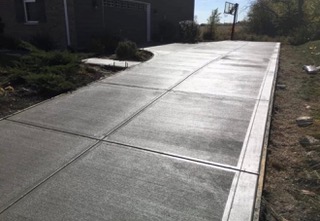
New forms go up to the elevation he shot, with the pitch set so water leaves. Mesh or rebar goes in on chairs, and he dowels or keys into the existing concrete where the new work meets old so the two edges stay together. Then he pours, screeds, floats and finishes to match what is around it — broom outside, harder trowel inside — tools the edges, and cuts the joints to depth on a layout that lines up with the panels that stayed.
Then it cures, the ground gets brought back to the edges and raked out, and the site gets cleaned up. He tells you when to walk on it and when to drive on it.
What It Costs in Rhodesdale
Removal and replacement carry two prices in one job. On the tear-out side it is square footage, how thick the old slab is, whether it is wire or rebar reinforced, how far the machine has to carry the broken concrete to load it, and how tight the access is. On the new side it is the same list as any pour: thickness, steel, how much dirt has to move, how much stone the base needs, and whether the mixer can reach the forms.
Fixing the reason it failed is the part nobody can price sight unseen. Estimates are free, and Steve would rather look at the ground than guess over the phone. He will also tell you when only part of the slab needs to come out, which is cheaper than doing all of it.
Why Choose Marshy Hope
Steve Hackett owns the business and runs the machine. Fifteen years in the trade, six of them working for himself out of Rhodesdale. He carries a $1,000,000 general liability policy and will send the certificate to you or your builder before he starts. Estimates are free, and you hear back the same day or the next one. One crew handles it from dirt to concrete, so nothing gets dropped in the handoff.
Get a Free Estimate
Call Steve about the old concrete.
Free estimate, and you'll hear back the same day or the next one.
443-439-1019Open 24/7 · Serving Easton to the Delaware beaches, Salisbury to Centreville
Tear-out and repour is part of his flatwork. See the rest on the concrete contractor page for Rhodesdale, and read about concrete driveways or patios and sidewalks for what goes back in.