Concrete Patios & Sidewalks in Rhodesdale, MD — Level Where You Walk
When You Need This
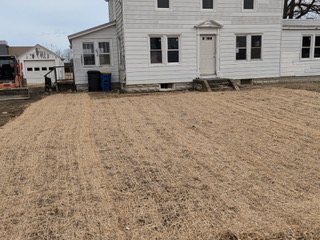
The back door opens onto grass, or onto a wobbly stack of block that has been the step for ten years. The grill sits in the yard. The chairs sink. Every cookout somebody trips on the same spot.
Or the old walk has lifted at a joint and it is a toe-catcher. The sidewalk to the front door holds a puddle. A tree root pushed one panel up two inches. The patio slopes back at the house instead of away from it, so the sliding door threshold stays wet and the block under it stays damp.
People also call because the yard is a low spot. On flat Shore ground water stands where you want to sit. A pad poured at the right height with the right pitch fixes both problems at once — you get somewhere dry to stand and the water gets pushed out to the yard.
How Steve Does It
He starts at the door. The finished concrete has to land at the right height under the threshold, low enough that water cannot come in and high enough that you are not stepping down into a hole. From there he sets the pitch, usually a quarter inch per foot away from the house, and shoots where the water ends up so it is not being sent at the neighbor or back at the foundation.
Topsoil comes off, the dirt gets packed, and stone base goes down and gets compacted to grade. Under a walk that is a few inches of crusher run. Under a patio he keeps the base full width and runs it past the forms so the edges do not break off later. Downspouts that dump where the pad is going get piped under it while the trench is open.
Forms go up straight and staked, curves bent with flexible form material where you want a radius. Wire mesh or rebar goes in on chairs. Steps get formed and poured with the pad, with the risers even top to bottom, because uneven risers are the thing people feel with their feet. An isolation joint goes between the new concrete and the house so the two can move on their own.
He pours, screeds, floats, and waits for the right window to finish. Broom finish is standard — it grips when it is wet and it hides less than a slick finish does. Edges get tooled round so they do not chip. Joints get cut on a layout that matches the shape of the pad, square to the house, in panels close to equal so the cuts look intentional and the cracking stays in them.
Then it cures, gets covered if the weather is hot or cold, and he tells you when to walk on it. Forms come off, the dirt gets brought back flush with the edge, and the ground gets raked so the mower can run right up to the concrete.
What It Costs in Rhodesdale
Square footage first, then how many corners and curves the forms have to follow, since form work is most of the labor on a small pad. Thickness and steel. How many steps, and how tall. How much dirt has to move to get the height right at the door. How deep the stone has to go if the ground is soft. Whether an old walk or patio has to come out. Access matters too — if the mixer cannot reach the back yard, the concrete has to be moved by hand.
Estimates are free, and Steve would rather look at the ground than guess over the phone. The door height and where water goes decide half the job, and neither one shows up in a phone measurement.
Why Choose Marshy Hope
Steve Hackett owns the business and runs the machine. Fifteen years in the trade, six of them working for himself out of Rhodesdale. He carries a $1,000,000 general liability policy and will send the certificate to you or your builder before he starts. Estimates are free, and you hear back the same day or the next one. One crew handles it from dirt to concrete, so nothing gets dropped in the handoff.
Get a Free Estimate
Call Steve about your patio.
Free estimate, and you'll hear back the same day or the next one.
443-439-1019Open 24/7 · Serving Easton to the Delaware beaches, Salisbury to Centreville
Walks and patios are flatwork. See the whole list on the concrete contractor page for Rhodesdale, and read about concrete slabs if the pad is for equipment instead of chairs.